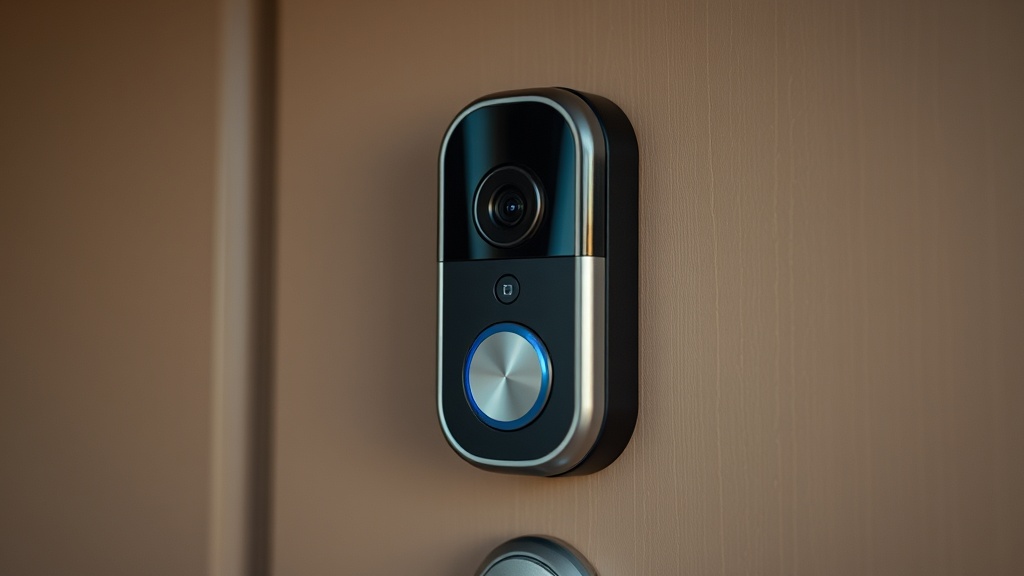
Executive Summary: Hardwiring a Ring Video Doorbell without an existing chime requires a carefully placed resistor to simulate the electrical load that a mechanical chime normally provides. This guide covers the exact specifications, wiring method, model compatibility, and safety considerations for a reliable, long-term installation.
Why Hardwiring a Ring Doorbell Without a Chime Creates an Electrical Problem
Removing a mechanical chime from your doorbell circuit eliminates the primary current-limiting resistance in the system. Without this load, the transformer supplies unregulated current directly to the doorbell, which can cause overheating, constant rebooting, or permanent hardware failure.
Most homeowners upgrading to a smart doorbell assume that direct-to-transformer wiring is a straightforward plug-and-play process. In practice, the mechanical chime inside a traditional doorbell circuit serves a dual purpose: it rings audibly, and it acts as a dummy load — a component that draws a predictable, controlled amount of current to keep the circuit balanced. When that chime is absent, the absence of this resistance fundamentally changes how current flows through the system.
According to the principles of electrical load management, any active power supply circuit without an adequate load will drive excess current through whatever resistance is present — in this case, the sensitive internal circuitry of your Ring doorbell. The result is predictable and damaging: thermal stress builds inside the device, capacitors degrade prematurely, and the microcontroller eventually fails. This is not a theoretical risk; it is a well-documented failure pattern observed across countless DIY smart home installations.
The solution, often called the resistor hack, involves introducing an external resistor into the wiring to replicate the electrical behavior of the missing chime. Done correctly, it is a permanent, cost-effective fix that protects both the transformer and the doorbell hardware.
The Core Principle Behind the Resistor Hack
The resistor hack works by inserting a 25-ohm, 50-watt wire-wound resistor in series with one power lead between the transformer and the Ring doorbell, absorbing excess energy and preventing dangerous overcurrent conditions.
The technical logic is straightforward. A wire-wound resistor is specifically designed to handle continuous power dissipation without overheating. For older Ring Video Doorbell models, the correct specification is a 25-ohm, 50-watt wire-wound resistor. This rating is not arbitrary — it is calibrated to match the approximate impedance of a standard mechanical doorbell chime, ensuring the transformer sees a load comparable to a normal, chime-equipped installation.
Wiring placement is critical. The resistor must be wired in series with one of the power leads running from the transformer to the doorbell terminals. Placing it in parallel would divide the voltage incorrectly and defeat the purpose entirely. Electrically, a series configuration means all current flowing to the doorbell must first pass through the resistor, which dissipates a controlled portion of the energy as heat before the remainder powers the doorbell’s electronics.
“A series resistor in a low-voltage doorbell circuit acts as a protective buffer, ensuring that the connected device receives stable, regulated power even when the traditional chime load is absent.”
— Verified Electrical Engineering Best Practice, consistent with NEC low-voltage circuit guidelines
Because the resistor dissipates energy as heat, physical mounting matters. Never enclose a 50-watt resistor in a sealed junction box without ventilation. Mount it on a metal bracket inside the electrical panel enclosure or in an open space near the transformer where heat can safely dissipate. Failure to allow heat dissipation is one of the most common installation errors that leads to secondary component damage over time.
Transformer Requirements for Stable Ring Doorbell Operation
A doorbell transformer must supply 16–24V AC at a minimum of 30VA to power a Ring Video Doorbell reliably. Using an undersized or DC transformer is one of the leading causes of intermittent connectivity and rapid hardware degradation.
The transformer is the foundation of the entire hardwired system. Many older homes are equipped with legacy 8V or 10V AC transformers that were adequate for simple mechanical chimes but fall far short of what modern smart doorbells require. Ring officially specifies a minimum of 16–24V AC and at least 30VA of output capacity for stable, continuous operation.
The distinction between voltage (V) and volt-amperes (VA) is frequently misunderstood by DIY installers. Voltage determines whether the device receives enough energy to function; VA — the apparent power rating — determines whether the transformer can sustain that energy delivery without overheating or dropping voltage under load. A transformer rated at 16V but only 10VA will supply the correct voltage momentarily but will sag under sustained current draw, causing the doorbell to reboot, lose Wi-Fi connection, or fail to record motion events reliably.
For homeowners undertaking this installation, upgrading the transformer is often the single most impactful improvement they can make. A quality 24V AC, 40VA transformer is widely available for under $20 and provides ample headroom for both the doorbell and the resistor’s power dissipation. You can learn more about low voltage transformer compatibility for smart home devices in our related technical guides.
Which Ring Models Require the Resistor — And Which Do Not
Older Ring Video Doorbell models require an external 25-ohm resistor when installed without a chime, while newer models like the Ring Video Doorbell Wired are designed for direct-to-transformer installation without external components.
Not all Ring doorbells are electrically identical, and applying a one-size-fits-all approach to this installation is a common source of confusion. The table below summarizes the key differences across Ring’s wired product lineup:
| Ring Model | Requires External Resistor? | Required Voltage | Min. Transformer VA | Notes |
|---|---|---|---|---|
| Ring Video Doorbell (1st Gen) | Yes | 16–24V AC | 30VA | 25Ω, 50W resistor required without chime |
| Ring Video Doorbell 2 | Yes (in most cases) | 16–24V AC | 30VA | Battery backup present but hardwire recommended |
| Ring Video Doorbell 3 / 3 Plus | Verify per setup | 16–24V AC | 30VA | Resistor may still be needed without chime kit |
| Ring Video Doorbell Wired | No | 16–24V AC | 30VA | Built-in power management; direct wiring supported |
| Ring Video Doorbell Pro / Pro 2 | Uses included Chime Bypass Kit | 16–24V AC | 40VA recommended | Ring provides proprietary bypass accessory |
The Ring Video Doorbell Wired represents Ring’s most efficient low-power design and is the only model explicitly engineered for direct-to-transformer installation in a chime-free circuit. Its internal power conditioning circuitry handles variable input loads without requiring an external dummy load. For all other wired models — particularly first and second-generation units — the external resistor remains the correct and recommended solution when a mechanical chime is not part of the circuit.
For Ring Doorbell Pro and Pro 2 owners, Ring includes a proprietary Chime Bypass Kit (also referred to as a diode bypass device) in the packaging. This kit serves functionally the same role as the resistor hack but is tailored specifically to the Pro model’s power requirements. Using a generic 25-ohm resistor in place of the included bypass kit on a Pro model is not recommended and may void your warranty.
Step-by-Step Installation: Wiring the Resistor Safely
Installing the resistor correctly requires turning off the transformer at the circuit breaker, connecting the resistor in series on one power lead, securing all connections with heat-shrink tubing, and verifying stable voltage with a multimeter before powering the doorbell.
Professional execution of this modification requires adherence to NFPA 70 National Electrical Code standards for low-voltage wiring, even though doorbell circuits typically operate well below the 50V threshold that triggers full NEC compliance requirements. Safety habits matter regardless of voltage level.
Follow this sequence precisely:
- Shut off power at the breaker. Locate the circuit breaker controlling your doorbell transformer and switch it off. Verify with a non-contact voltage tester that the transformer output wires are de-energized before touching them.
- Identify the two transformer output leads. These are typically 18–20 AWG wires running from the transformer to where the chime was previously located. Label them to avoid confusion during reassembly.
- Cut and strip one lead. Select either the positive or neutral output lead and cut it at a convenient point. Strip approximately 15mm of insulation from each cut end using precision wire strippers.
- Connect the resistor in series. Use small wire nuts or solder-and-heat-shrink connections to attach one resistor terminal to each stripped wire end. The 25-ohm resistor has no polarity — either terminal can connect to either wire end. Tug-test each connection firmly.
- Secure and mount the resistor. Position the resistor in open air, away from insulation, plastics, or sealed enclosures. Secure it with a zip tie to a metal bracket or the transformer housing.
- Restore power and verify voltage. Switch the circuit breaker back on. Use a multimeter set to AC voltage to measure across the two output leads at the point where they will connect to the doorbell. You should read between 16V and 24V AC. If voltage is outside this range, your transformer requires replacement.
- Connect the doorbell terminals. Attach the two output leads to the doorbell’s screw terminals. Tighten firmly — loose connections cause intermittent resistance changes that mimic doorbell malfunctions.
- Complete setup in the Ring app. With power restored, the doorbell should initialize and appear in the Ring app within 60–90 seconds. Follow the in-app setup wizard to complete Wi-Fi configuration.
Using 18–20 AWG stranded copper wire throughout is strongly recommended. Solid copper wire, while acceptable, is more prone to fracture at connection points after repeated vibration and thermal cycling. Stranded wire maintains connection integrity significantly longer in residential doorbell applications.
Common Failure Modes When the Resistor Is Omitted or Incorrectly Installed
Omitting the resistor on incompatible Ring models leads to predictable failure patterns including overheating, continuous reboot loops, Wi-Fi disconnection, and ultimately permanent internal circuit damage within days or weeks of installation.
The thermal consequences of bypassing a chime without a load resistor are well understood in electronic engineering. Without adequate resistance, the transformer operates in a near-short-circuit condition relative to the doorbell’s input stage. The doorbell’s internal voltage regulator — typically a small integrated circuit — receives far more current than its design tolerates. Heat builds inside the sealed housing, and since Ring’s compact form factor leaves minimal space for thermal dissipation, failure occurs rapidly.
Symptom progression in unprotected installations typically follows this pattern: the doorbell initially functions normally for several hours or days, then begins experiencing random Wi-Fi disconnections as thermal throttling engages. Rebooting becomes more frequent. Eventually, the device either fails to power on entirely or enters a permanent reboot loop from which factory reset cannot recover. At this stage, the internal circuitry has sustained irreversible damage, and the device must be replaced.
Incorrect resistor specifications produce a subtler failure. Using a resistor with too high an ohm value (e.g., 50 ohms instead of 25 ohms) will cause voltage drop across the resistor to become excessive, starving the doorbell of sufficient voltage and producing the same Wi-Fi instability and connectivity loss — but without the thermal failure mode. Using a resistor with insufficient wattage rating (e.g., a 25-ohm, 5-watt resistor instead of 50-watt) will cause the resistor itself to overheat and fail, potentially creating a fire hazard in enclosed spaces.
FAQ
Can I hardwire a Ring Video Doorbell directly to a transformer without any chime or resistor?
Only specific models like the Ring Video Doorbell Wired are designed for direct-to-transformer installation without an external resistor or chime. For older models including first and second-generation Ring doorbells, omitting both the chime and the resistor will expose the device to unregulated current, causing overheating and hardware failure. Always verify your specific model’s requirements in Ring’s official documentation before proceeding.
What exact resistor specification is needed for the Ring doorbell resistor hack?
The correct specification is a 25-ohm, 50-watt wire-wound resistor. The 25-ohm value replicates the impedance of a standard mechanical chime, while the 50-watt power rating ensures the resistor can handle continuous energy dissipation without overheating. Using an underrated resistor (e.g., 5W or 10W) at this ohm value will cause the resistor to overheat and fail, creating a potential fire hazard.
Will upgrading to the Ring Video Doorbell Pro eliminate the need for the resistor hack?
The Ring Video Doorbell Pro does not use the standard 25-ohm resistor method. Instead, Ring includes a proprietary Chime Bypass Kit in the Pro’s packaging, which serves the same electrical function but is calibrated to the Pro’s specific power profile. Using a generic resistor in place of the included bypass kit on a Pro model is not recommended and may affect performance or warranty coverage.
References
- Ring Official Support: Connecting Ring Video Doorbell Directly to a Low-Voltage Transformer
- NFPA 70: National Electrical Code (NEC) — Low Voltage Wiring Standards
- Wikipedia: Electrical Load — Principles of Load Management in AC Circuits
- Wikipedia: Resistor — Wire-Wound Resistor Types and Power Ratings