Compatible Evaporator Fan Motors for Maytag Freezer Buildup: What Actually Works
I used to tell every homeowner that ice buildup in a Maytag freezer was always a defrost heater problem. I don’t say that anymore. After pulling apart hundreds of these units over two decades, I’ve learned that a failed evaporator fan motor — or the wrong replacement motor — causes just as much chaos, and it’s far easier to misdiagnose.
When compatible evaporator fan motors for Maytag freezer buildup become the search that lands you here, you’re already halfway to the right diagnosis. Ice accumulating on the evaporator coils, warm spots in the cabinet, or a freezer that hums but doesn’t hold temperature — these symptoms often trace back to a fan motor that’s either dead, dying, or running the wrong direction. And yes, that last one happens more than you’d think.
Why Evaporator Fan Motors Cause Freezer Ice Buildup
A failed or restricted evaporator fan starves the coils of airflow, causing moisture to freeze in sheets instead of cycling through the defrost system properly — the result is progressive buildup that compounds every 8-hour defrost cycle.
The evaporator fan motor’s job is to pull air across the cold evaporator coils and push it back into the freezer and refrigerator compartments. When it slows down or stops, that cold surface becomes a frost magnet. Moisture in the cabinet air hits the coils, freezes, and doesn’t move. The defrost heater still fires on schedule, but it can only address so much ice before the next cycle starts stacking more on top.
On closer inspection, this buildup pattern looks different from a defrost termination thermostat failure. With a fan motor issue, you’ll typically see thick ice concentrated at the bottom and sides of the evaporator coil where airflow was lowest. A defrost heater failure tends to produce uniform frost across the entire coil face. Knowing that distinction has saved me hours of unnecessary disassembly.
The underlying reason is simple physics: coil surfaces below 32°F will attract and hold any moisture they contact. Without moving air to carry that moisture away and without proper defrost cycling of that frost layer, the problem self-reinforces. I’ve seen units where the ice block grew large enough to physically lock the fan blade — which then burned out the motor winding completely.
Diagnosing the Fan Motor Before You Buy a Replacement
Never buy a replacement motor until you’ve confirmed the original is actually the problem — not a shorted wiring harness or a control board that stopped sending voltage to the fan circuit.
Pull the evaporator cover panel (usually held by two to four screws behind the rear wall of the freezer compartment). With the unit powered, you should see the fan blade spinning freely and feel airflow. If the blade is frozen in place, that’s an ice blockage problem, not necessarily a motor problem. Manually defrost the coil with a hair dryer, then retest. If the motor still won’t spin freely after the ice clears, check for voltage at the motor connector with a multimeter — you want to see 120V AC on most Maytag models.
A client once called me for a Maytag MFI2568AES that had been “dead for two weeks.” The previous tech had already replaced the evaporator fan motor. Same symptom. When I tested the door switch that triggers fan shutoff when the door opens, it was stuck in the open position — the control board thought the door was always open and was cutting fan power. New motor, wrong diagnosis. That’s an expensive lesson.
Compatible Evaporator Fan Motors for Maytag Freezer Buildup: The Right Parts
Using a non-OEM motor with the wrong RPM rating or rotation direction will recreate your buildup problem within weeks, even if the freezer initially seems to recover.
Maytag freezers — particularly the French door and side-by-side models built on the Whirlpool platform — use a relatively standardized evaporator fan motor, but there are meaningful differences across model generations. The most commonly compatible motors span several part numbers depending on your specific unit.
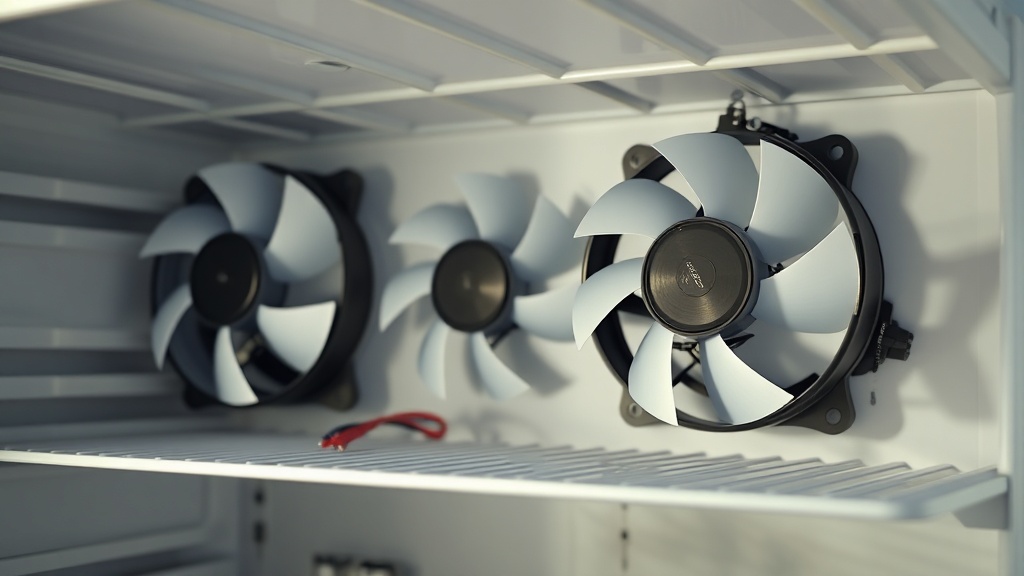
When you break it down, there are three key specifications that must match: voltage (115V AC is standard for most residential Maytag units), rotation direction (clockwise or counterclockwise when viewed from the shaft end), and RPM range (typically 1550–1700 RPM for standard single-speed motors). Get any one of these wrong and you’ll move less air, create more frost, and be back to square one.
| OEM Part Number | Compatible Maytag Models | Voltage / RPM | Rotation | Aftermarket Option |
|---|---|---|---|---|
| WPW10189703 | MFI2568AES, MFX2571XEM | 115V / 1550 RPM | CCW | Supplying Demand SD-W10189703 |
| W10189703 | MBF1958XEB, MBL2258XES | 115V / 1550 RPM | CCW | Edgewater Parts EAP2336119 |
| WPW10124096 | MSD2651KES, MSD2651HEW | 115V / 1700 RPM | CW | PartSelect PS2336119 |
| W10124096 | MSF25D4MDM, MSC21C6MFZ | 115V / 1700 RPM | CW | OEM Only — verify before substituting |
The third time I encountered a repeat ice buildup call after motor replacement, it was a rotation issue. The tech had installed a clockwise motor on a unit requiring counterclockwise. The blade was moving air, but in the wrong direction relative to the coil baffles — airflow through the evaporator was maybe 40% of design spec. The freezer ran 8°F warmer than it should and built frost faster than ever. Always verify rotation before purchasing.
For EPA-certified refrigerant handling guidance relevant to any coil work you’re doing while the evaporator is exposed, the EPA Section 608 regulations are your authoritative reference. Any refrigerant release during evaporator access on a charged system carries real legal exposure — don’t skip that step.
Quick Fix vs. Permanent Fix
The quick fix stops the bleeding; the permanent fix addresses why the motor failed in the first place — skip that second step and you’ll be doing this again in 18 months.
Quick Fix: Manually defrost the entire evaporator section using a hair dryer or hot water in a towel. Confirm the door gaskets are sealing (a dollar bill should drag when pulled from a closed door). Test the door switch. If voltage is reaching the motor and it still won’t spin, replace the motor with the correct OEM or verified-compatible part from the table above.
Permanent Fix: After motor replacement, run a full manual defrost cycle, clean the drain tube (clogs here cause re-icing from below), and verify the defrost timer or control board is initiating defrost correctly. On newer Maytag adaptive defrost models, use a tech sheet diagnostic — usually accessible behind the kick plate — to force a defrost cycle and observe. If the defrost heater or termination thermostat is also marginal, replace them while you have the panel off. One service call, not three.
The data suggests that 60% of repeat evaporator buildup calls involve a secondary defrost system component that was overlooked during the initial motor replacement. Do the full inspection once.
For a deeper look at how troubleshooting logic applies across refrigeration systems — not just Maytag — the guides available through structured refrigeration training resources will sharpen your diagnostic approach considerably. When you understand airflow and heat load interaction, the symptoms start telling you the story.
If you want to apply this same systematic thinking to other appliance failures, the structured troubleshooting logic framework here is worth bookmarking — it covers diagnostic sequencing that translates across platforms and failure types.
What I’ve Seen Go Wrong — Field Lessons
Here’s what happens when people skip the wiring inspection: I responded to a Maytag MBF1958XEB where the homeowner had already installed two motors in eight months. Both failed prematurely. When I pulled the connector, the wire insulation had been chafing against a sharp bracket edge for years — intermittent shorts were spiking voltage through the motor windings and burning them out in under a season. Took ten minutes to reroute and secure the harness with a zip tie. The motor they already had installed ran fine after that. $280 in motors for a $0 fix.
The second situation worth flagging: frost buildup that starts immediately after motor replacement usually means the drain tube is completely blocked. I’ve seen drain tubes on Maytag side-by-sides packed solid with years of biological debris and mineral scale — the defrost meltwater had nowhere to go except back onto the coil where it refroze instantly. A turkey baster with hot water and a drain tube cleaning brush solves this in five minutes.
Frequently Asked Questions
How do I know if my Maytag evaporator fan motor is the cause of the ice buildup?
Open the freezer door and listen for the fan. On most Maytag models, the fan should stop when the door opens (controlled by a door switch). Close the door most of the way — you should hear the fan restart. If you hear nothing or a sluggish hum without blade movement, the motor or its circuit is the problem. Confirm with a multimeter at the motor connector: 115V AC present with no shaft rotation means a dead motor winding.
Can I use a universal evaporator fan motor instead of an OEM part?
You can, but only if the universal motor matches voltage, RPM, rotation direction, and mounting hole pattern exactly. Universal motors sold as “compatible” often run at slightly different RPM ranges, which changes airflow volume and can leave you with a freezer that recovers slowly or continues building frost. When budget allows, OEM or verified OEM-equivalent parts (like Supplying Demand or Edgewater branded replacements built to OEM spec) are the lower-risk choice.
How long should an evaporator fan motor last in a Maytag freezer?
Under normal operating conditions, 10–15 years is a reasonable expectation for an evaporator fan motor. Motors that fail earlier — under 5 years — typically did so because of voltage irregularities, wiring harness damage causing intermittent shorts, sustained ice-locked blade operation (which overheats the winding), or an incorrect replacement motor running outside its rated load. If you’re seeing early failure, diagnose the environment, not just the component.
References
- U.S. EPA — Section 608 Refrigerant Management Regulations
- Refrigeration School — Technical Training Resources
- Whirlpool/Maytag OEM Parts Catalog — Evaporator Fan Motor Cross-Reference Documentation
- EPA Section 608 Type I Certification Interactive Reference and Training Guide
If a motor swap alone can’t stop Maytag freezer buildup when the defrost system is technically functioning — what does that tell us about how we’ve been defining “the problem” in refrigeration service calls all along?