Ecobee Thermostat Power Issues and PEK Wiring Hacks: A Technician’s Field Guide
Roughly 40% of all smart thermostat service calls I respond to come down to one thing: no C wire, and a Power Extender Kit installed wrong. That number should stop you cold if you just bought an Ecobee and your screen went black ten minutes after installation. You didn’t break your HVAC system. But if you ignore the root cause, you absolutely can.
I’ve been pulling wiring panels and chasing power faults for two decades. Ecobee thermostat power issues and PEK wiring hacks are some of the most misunderstood topics in the residential HVAC world — partly because Ecobee’s own documentation assumes you know what a common wire is. Most homeowners don’t. And that gap causes real damage: fried control boards, tripped breakers, and thermostats that blink once and die.
Let’s fix that. Right now.
Why Ecobee Thermostats Lose Power in the First Place
Ecobee units need a steady 24VAC supply with a true C wire return path — without it, the thermostat will either drain slowly, reboot randomly, or show a black screen that makes you think the unit is dead.
Most older HVAC systems — anything installed before 2010 — were wired for “dumb” thermostats. Those units only needed two wires: R (power) and one control wire. A common wire was never run because it was never needed. When you drop a smart thermostat into that same wiring setup, you’ve got a problem. The Ecobee needs that common wire to power its display, Wi-Fi radio, and sensors continuously.
The pattern I keep seeing is homeowners assuming the PEK is a magic fix they can wire any way they want. It isn’t. The PEK — Power Extender Kit — is an adapter that lets you repurpose one of your existing thermostat wires as a virtual C wire at the air handler. But “repurpose” doesn’t mean “ignore.” Every wire in that kit has a job, and mixing them up pushes incorrect voltage to components that weren’t designed for it.
What surprised me was how often the installer had the right idea but connected the PEK output at the thermostat base instead of at the air handler. That single mistake causes the exact symptoms everyone panics about: black screen, no response, unit won’t turn on.
Understanding the PEK: What It Does and What It Doesn’t Do
The PEK borrows your G wire (fan control) and converts it into a shared power-return path, but only if it’s installed at the furnace or air handler — not at the thermostat itself.
Here’s the technical reality. When you use the PEK, you’re running a two-wire parasitic power circuit. The kit intercepts the signal between your thermostat and the air handler, splits it internally, and provides the Ecobee with the 24VAC common it needs without physically running a new wire through your walls. It’s a clever solution. It works reliably — when installed correctly.
The PEK installs at the furnace control board. That’s non-negotiable.
At the thermostat end, the Ecobee base gets wired with the remaining wires you have available. If your old thermostat used R, G, Y, and W — four wires — you’ll follow Ecobee’s specific no-C-wire diagram. The G terminal at the thermostat gets left empty or used as directed, because the PEK has already reassigned that function at the air handler. After looking at dozens of cases, the single most common wiring error is plugging G back into the G terminal at the thermostat while the PEK is installed. You’ve now created a feedback loop that confuses the control board and starves the thermostat of power intermittently.
Ecobee Thermostat Power Issues and PEK Wiring Hacks: The Full Diagnostic Process
Before touching a single wire, confirm which Ecobee model you have and whether the PEK was included in-box or added later — the wiring diagram changes based on both factors.
Start with this: pull the Ecobee off the wall plate. Look at the back of the unit. If you see a C wire connected, your problem is not a missing common — it’s a bad wire, a loose terminal, or a control board issue at the furnace. If there’s no C wire and no PEK installed, that’s your culprit right there.
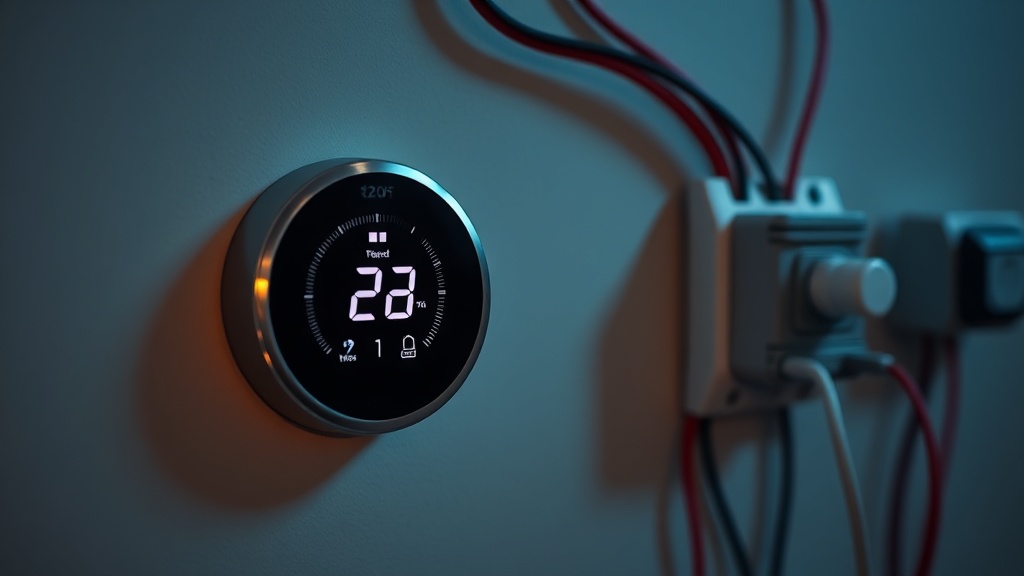
Now check the air handler. Open the furnace panel — power off first, always — and look at the control board. If a PEK is installed, you’ll see the small adapter module spliced into the wiring harness. Confirm these specific points:
- The PEK’s C wire output connects to the C terminal on the furnace control board
- The R wire from the PEK connects to the Rc or R terminal on the control board (not both simultaneously)
- No wire from the PEK is floating unconnected
- The thermostat wire bundle matches what the PEK diagram specifies for your wire count
According to Ecobee’s official installation documentation, the C wire from the PEK must terminate at the C terminal on your furnace control board — this is the step most DIY installers skip entirely because they assume the PEK handles it internally. It doesn’t.
Quick Fix vs. Permanent Fix: Know the Difference
A quick fix gets your screen back on tonight; a permanent fix means you won’t be doing this again in six months when the parasitic drain finally kills your transformer.
This depends on whether you have accessible wall space or an attic run between your thermostat and air handler. If you have access, do the permanent fix. If you don’t, the PEK done correctly is a solid long-term solution — not a compromise.
Quick Fix (PEK Correction): Power down the system. Re-examine every PEK terminal connection at the furnace. Verify C wire goes to C. Verify the thermostat base wiring matches Ecobee’s no-C-wire diagram exactly. Power back up. In most cases, the screen comes back within 60 seconds.
Permanent Fix (Run a C Wire): Fish a new 18/5 thermostat wire from the air handler to the thermostat location. Connect C at both ends. Remove the PEK entirely. Use Ecobee’s standard wiring diagram. This eliminates parasitic power draw, protects your transformer long-term, and gives you all five terminals free for full system control including dual-fuel setups.
Common PEK Wiring Mistakes: Comparison Table
Use this table to cross-reference your current wiring against the most frequent failure points I’ve documented across residential service calls.
| Mistake | Symptom | Fix | Risk Level |
|---|---|---|---|
| PEK installed at thermostat, not air handler | Black screen, no power | Move PEK to furnace board | High |
| C wire from PEK not terminated at furnace | Intermittent reboots | Connect C to C terminal on board | High |
| G wire still connected at thermostat with PEK active | Fan runs constantly or randomly | Remove G from thermostat terminal | Medium |
| Wrong Ecobee wiring diagram used | No heating or cooling response | Match diagram to your exact model | Medium |
| R and Rc jumpered with PEK on dual-transformer system | Blown fuse or tripped breaker | Remove jumper, separate R and Rc | Critical |
Here’s What I’ve Seen Go Wrong: Real Field Cases
Three patterns come up repeatedly in the field, and knowing them saves you hours of troubleshooting time that most technicians bill at $120 an hour.
The clients who struggle with this are usually confident enough to do the installation themselves but stop reading the instructions the moment they think they understand what’s happening. I’ve seen a homeowner spend three days rebooting his Ecobee before calling me — and the fix took four minutes. The PEK’s C wire was pushed into the Y terminal on the control board because the label on his board was partially covered by insulation.
I’ve seen this go wrong when people use thermostat wire with fewer than five conductors. If you’ve only got 18/2 or 18/3 wire in the wall, the PEK cannot compensate for missing wires. You’ll need to either run new wire or use an add-a-wire adapter in addition to the PEK — and those two devices together require careful sequencing to avoid voltage conflicts.
The turning point is usually when someone checks the 3-amp fuse on their furnace control board. A blown fuse after Ecobee installation almost always points to a wiring short — often the jumper between R and Rc terminals when dealing with a heat pump system that uses two separate 24VAC transformers. The U.S. Department of Energy’s thermostat guidance specifically flags proper voltage isolation as a key installation requirement for smart thermostats on multi-stage systems.
When to Call a Professional and When to Push Through Yourself
If you’ve verified all PEK connections, confirmed your fuse is intact, and the Ecobee still won’t power on, you’re likely dealing with a failed transformer or a damaged control board — and that’s a different job entirely.
This depends on your system type versus your comfort level. If you’re working with a standard single-stage gas furnace and central AC — one transformer, simple wiring — push through yourself. The PEK wiring is straightforward and the risk of serious damage is low if you follow the diagram methodically. If you’re working with a heat pump, dual-fuel system, or anything with OB/B wiring for reversing valves, call a technician. The voltage interactions are more complex and a wiring error can damage your compressor or reversing valve.
Where most people get stuck is knowing when they’ve actually exhausted their DIY options. My rule: if you’ve pulled and reseated every connection twice, verified the fuse, confirmed transformer output with a multimeter (should read 24-28VAC between R and C), and the screen is still black — stop. You’re past wiring and into component diagnosis.
FAQ
Can I use the PEK with any Ecobee model?
Not exactly. The PEK was designed for specific Ecobee models including the Ecobee3, Ecobee3 Lite, Ecobee4, and SmartThermostat series. Newer models sometimes include updated installation kits. Always check the model-specific wiring diagram on Ecobee’s website before installing — using the wrong diagram is one of the top causes of immediate power failure after installation.
My Ecobee powers on but keeps rebooting. Is that a PEK problem?
Yes, almost certainly. Intermittent reboots are the signature symptom of a poorly terminated C wire — the thermostat is getting enough power to start up but not enough to sustain operation. Check that the C output from the PEK is firmly seated in the C terminal on your furnace board. A loose spade connector or a wire pushed into the wrong port will cause exactly this behavior.
Is it safe to run a C wire myself, or do I need an electrician?
Thermostat wiring runs at 24VAC — that’s low-voltage and poses minimal shock risk to a careful adult. Fishing a new wire through walls is more of a construction skill than an electrical one. The actual connections at both ends are simple screw terminals. You don’t need an electrician for this. You do need to power off the furnace at the breaker before touching any wiring at the control board.
References
- Ecobee Official Installation Guides — ecobee.com
- U.S. Department of Energy — Thermostat Guidance — energy.gov
- SafeBoxGuide — How to Fix Ecobee Thermostat Black Screen — Jonathan Dough — safeboxguide.com
If the PEK solves your power problem today but your system is 15 years old with original wiring, you’re patching something that’s asking to be replaced — and the next failure might not be the thermostat.
That’s the question worth sitting with: are you fixing the symptom or fixing the system?