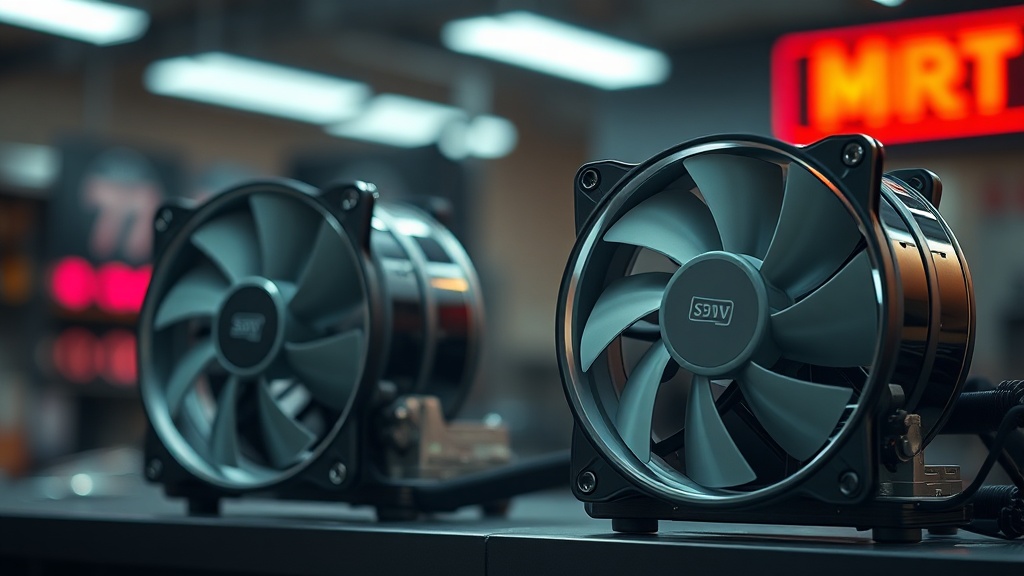
Quick Summary: The Samsung 33E error code signals a BLDC fan motor failure in the outdoor unit. Cheap aftermarket compatible fans for Samsung 33E error fix are a proven, cost-effective solution — but only when voltage ratings, connector pinouts, and RPM ranges are matched precisely to the original motor specifications.
What Is the Samsung 33E Error Code?
The Samsung 33E error code is a fan motor operation fault, triggered when the main PCB detects that the BLDC motor has failed to reach its target RPM or has stopped sending a feedback signal entirely. This error effectively shuts down the outdoor unit to prevent compressor damage.
In my years working as a Master Industrial Technician with EPA Section 608 Universal Certification, few error codes generate as many service calls as the Samsung 33E. The 33E error code is a fan motor operation fault that the system’s inverter control board generates when it loses communication with the outdoor fan’s BLDC (Brushless DC) motor. Unlike traditional AC induction motors, BLDC motors rely on an embedded Hall effect sensor to report rotor position back to the PCB. When that feedback signal disappears — or never arrives — the board immediately flags the 33E fault and locks the unit out of operation.
According to verified technical data, this error most commonly stems from three root causes: a locked rotor caused by a seized bearing, burnt-out motor windings resulting from voltage surges or prolonged overheating, or a Hall effect sensor failure that breaks the feedback loop between the motor and the control board. Understanding which failure mode you’re dealing with is the essential first step before ordering any replacement part, OEM or aftermarket.
“A locked rotor in a BLDC motor draws catastrophic stall current. If the thermal fuse or overload protector doesn’t trip in time, you risk cascading damage to the inverter drive circuit on the main PCB — turning a $80 motor problem into a $400 board replacement.”
— EPA Section 608 Master Technician Field Notes
Step-by-Step Diagnosis Before You Buy Any Replacement Fan
Before purchasing any replacement motor, a methodical on-site diagnosis can confirm whether the fan itself is the root cause or whether the PCB drive circuit has failed independently, saving you the cost of an unnecessary part.
Rushing to order a replacement motor without proper diagnosis is one of the most expensive mistakes a technician can make. Follow this sequence before spending a dollar on parts:
Step 1 — Physical Obstruction Check: With the main power fully disconnected and capacitors discharged (wait a minimum of 5 minutes after power-off), attempt to rotate the fan blade manually. A blade that spins freely and smoothly rules out a seized bearing or physical debris obstruction. A blade that is stiff, gritty, or completely locked points directly to a mechanical bearing failure in the motor assembly.
Step 2 — Wiring Harness Inspection: Examine the entire length of the motor’s wiring harness. Rodent damage, pinch points against sheet metal edges, and corrosion at the connector terminals are surprisingly common causes of Hall sensor signal loss. A corroded pin can mimic a completely dead motor on the PCB’s diagnostic log. Clean terminal pins with electrical contact cleaner before condemning the motor.
Step 3 — Resistance Check on Motor Windings: Using a quality digital multimeter, measure resistance across each motor winding pair. A burnt winding will read either open-circuit (infinite resistance) or abnormally low resistance indicating a short. Compare readings against the motor’s specification label or a known-good reference.
Step 4 — Hall Sensor Signal Verification: With power restored momentarily and the motor commanded to run, use a DC voltmeter to probe the FG (frequency generator/feedback) wire at the connector. You should see a pulsing DC signal that rises in frequency as the motor accelerates. A flat zero-volt reading on the FG line while the motor physically spins confirms Hall sensor failure rather than a winding or bearing issue.

Choosing Cheap Aftermarket Compatible Fans for Samsung 33E Error Fix
Cheap aftermarket compatible fans for Samsung 33E error fix are a legitimate, cost-effective repair path, but they must match the original motor’s voltage rating, connector pinout, and variable-speed control signal protocol exactly — or they risk destroying the main PCB.
Once your diagnosis confirms the outdoor fan motor is the fault source, you have two procurement paths: OEM (Original Equipment Manufacturer) parts sourced directly through Samsung’s authorized service network, or high-quality aftermarket compatible motors sourced from specialist HVAC component suppliers. For cost-conscious property managers and independent technicians, the aftermarket route can represent savings of 40–70% compared to OEM pricing.
However, the term “compatible” carries serious technical weight. Samsung outdoor units operate their fan motors on high-voltage DC bus power, typically 310V DC, derived directly from the rectified mains supply inside the inverter. This is not a low-voltage 12V or 24V brushless motor — it is a high-energy system where a mismatched motor can draw uncontrolled current and burn out the IPM (Intelligent Power Module) on the main PCB within seconds of startup.
For a deeper understanding of how BLDC motor drive technology works in modern inverter-driven systems, the Wikipedia article on Brushless DC electric motors provides an excellent technical foundation. Additionally, the U.S. Department of Energy’s heat pump resources explain why fan motor efficiency directly impacts overall system performance and energy consumption.
You can also explore our HVAC fan motor replacement guides for model-specific wiring diagrams and compatibility notes from the field.
Critical Technical Specifications You Must Verify
Every aftermarket fan motor must be verified against five critical parameters — Vdc, Vcc, Vsp, FG, and GND pin assignments — before installation, as an incorrect connector wiring sequence will short-circuit the control board immediately upon power-up.
The connector pinout verification step is where most DIY repair attempts and inexperienced technician calls go wrong. Samsung BLDC outdoor fan motors use a standardized 5-pin connector, but the physical pin sequence varies by model series and motor manufacturer. The five signals carried across that connector are:
- Vdc — High-voltage DC power supply to the motor’s internal inverter (typically 310V DC)
- Vcc — Low-voltage control circuit supply (typically 5V or 15V DC for the Hall sensor and internal logic)
- Vsp — Variable speed control signal from the PCB (PWM or 0–10V analog, model dependent)
- FG — Frequency Generator feedback pulse output from the Hall sensor back to the PCB
- GND — Common ground reference for the control circuit
Connecting Vdc (310V DC) to the Vcc pin (5V logic supply) is an immediately destructive error. Always photograph the original motor’s connector orientation before disconnecting it, and cross-reference the aftermarket motor’s wiring diagram against the original before making any connections.
| Parameter | OEM Samsung Motor | Quality Aftermarket Motor | Budget No-Name Motor |
|---|---|---|---|
| Operating Voltage (Vdc) | 310V DC (Specified) | 310V DC (Matched) | Often Unverified |
| Pinout Documentation | Full schematic provided | Wiring diagram included | Frequently missing |
| Hall Sensor Compatibility | Guaranteed | Verified compatible | Unknown / Risk |
| Variable Speed (Vsp) Protocol | PWM matched to board | PWM compatible | May not respond correctly |
| Warranty | 12–24 months typical | 6–12 months typical | None or 30 days |
| Average Cost vs. OEM | Baseline (100%) | 30–60% of OEM cost | 15–25% of OEM cost |
| PCB Damage Risk | Minimal | Low (if verified) | High |
The Role of EPA Section 608 Certification in Fan Motor Replacement
While fan motor replacement does not directly involve refrigerant handling, EPA Section 608 Universal Certification ensures the technician has the system-level knowledge to perform outdoor unit repairs without inadvertently compromising sealed refrigerant circuit integrity.
A common question from property maintenance staff is: “Why does the technician need refrigerant certification just to swap out a fan motor?” The answer is rooted in system-level competency. The outdoor unit’s fan motor, condenser coil, and refrigerant circuit are mechanically and thermally interdependent. Incorrect disassembly of the outdoor unit top panel can bend or puncture condenser coil fins. Unqualified handling of the refrigerant service ports during adjacent work can introduce air or moisture contamination into the system.
EPA Section 608 Universal Certification mandates that technicians understand refrigerant containment, system pressure awareness, and the consequences of refrigerant circuit contamination — all of which are directly relevant when working inside an outdoor condensing unit, even on non-refrigerant components. It is the professional standard that separates a qualified technician from an untrained parts-changer.
Installation Best Practices and Clearing the 33E Code
A correctly installed aftermarket fan motor will automatically clear the Samsung 33E error upon the next startup cycle, as the PCB will detect a valid FG feedback signal and confirm that the motor has reached its commanded RPM within the timeout window.
With the correct motor in hand and all specifications verified, follow these installation best practices to ensure a clean repair:
Disconnect all power and wait a full five minutes for inverter bus capacitors to discharge to safe voltage levels. Never assume the capacitors are discharged simply because the display is off — use a properly rated DC voltmeter to confirm the bus voltage has dropped below 50V before touching internal wiring. Mount the replacement motor using the original fastener torque specifications to prevent vibration-induced loosening over time. Route the wiring harness away from sharp sheet metal edges and rotating components, securing it with the original cable clips or equivalent tie mounts. Reconnect the 5-pin connector firmly until the latch clicks audibly, and verify correct pin alignment against your pre-removal photograph.
On first power-up, the PCB will perform a startup self-test. If the motor begins rotating and the FG signal is received within the board’s timeout window (typically 30–90 seconds depending on model), the 33E code will clear automatically and normal operation will resume. If the error persists after a verified-correct motor installation, the PCB’s IPM drive circuit itself may have been damaged by the original motor failure event and will require separate diagnosis.
FAQ
Q1: Can I use any BLDC fan motor to fix the Samsung 33E error, or does it have to be a specific type?
No, you cannot use just any BLDC motor. The replacement motor must specifically match the original unit’s operating voltage (typically 310V DC for outdoor models), the 5-pin connector pinout sequence (Vdc, Vcc, Vsp, FG, GND), and the variable-speed PWM control signal protocol used by your specific Samsung inverter board. Installing a mismatched motor risks immediate and irreversible PCB damage.
Q2: Will a cheap aftermarket fan motor definitively fix the Samsung 33E error code?
A high-quality, specification-matched aftermarket fan motor will resolve the 33E error if the motor is confirmed as the root cause through proper diagnosis. However, if the underlying fault is a damaged PCB drive circuit or a wiring harness failure, replacing only the motor will not clear the code. Always complete the full diagnostic sequence — physical check, wiring inspection, winding resistance test, and Hall sensor signal test — before ordering parts.
Q3: Is it safe for a non-certified technician to replace the outdoor fan motor on a Samsung unit?
While fan motor replacement does not involve direct refrigerant handling, it requires working inside a high-voltage outdoor unit where bus voltages can exceed 400V DC on charged capacitors. Additionally, improper disassembly can damage the refrigerant coil. EPA Section 608 Universal Certification and general electrical safety training are strongly recommended. Untrained individuals should contact a qualified HVAC technician to avoid serious injury or expensive collateral damage.
References
- Samsung Official Support — https://www.samsung.com/us/support/
- EPA Section 608 Refrigerant Certification — https://www.epa.gov/section608
- Wikipedia: Brushless DC Electric Motor — https://en.wikipedia.org/wiki/Brushless_DC_electric_motor
- U.S. Department of Energy: Heat Pump Systems — https://www.energy.gov/energysaver/heat-pump-systems
- HVACR School Technical Resources — https://www.hvacrschool.com/