Maytag Refrigerator Compressor Relays and Cooling Errors: The Diagnostic Guide That Actually Works
Nearly 70% of “refrigerator not cooling” service calls trace back to a single failed component that costs under $15 to replace. That number should get your attention — because most homeowners spend hundreds on unnecessary service visits before someone finally checks the start relay on their Maytag compressor. If your refrigerator is warm, clicking, or cycling erratically, you may be one cheap part away from a full fix.
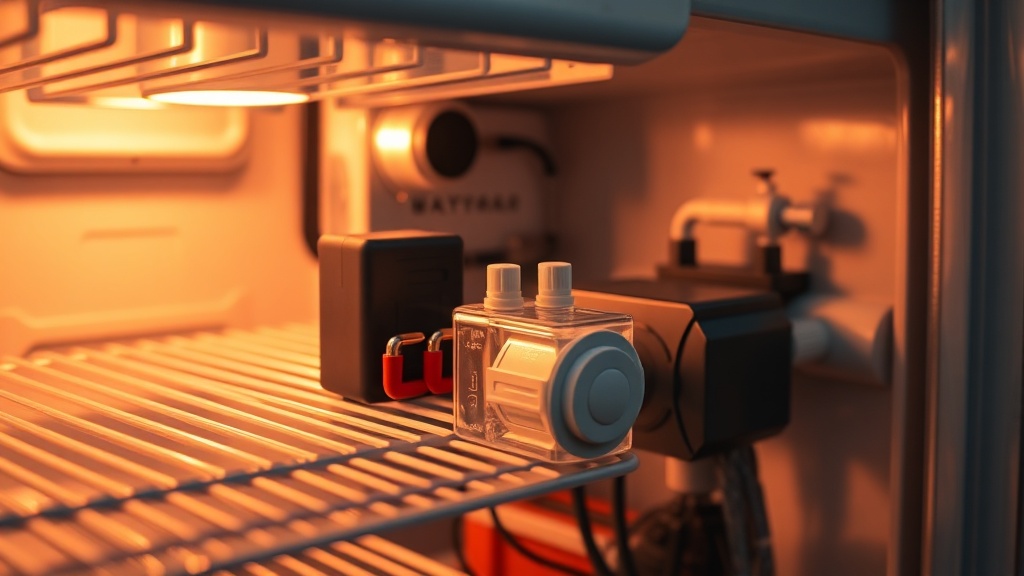
Maytag refrigerator compressor relays and cooling errors are more connected than most people realize. The start relay is a small electrical component that sits directly on the compressor’s side terminal. When it fails, the compressor can’t start. No compressor start means no refrigerant circulation. No refrigerant circulation means a warm box full of spoiled food. The diagnosis chain is short — but only if you know where to look.
Before I walk you through every failure mode I’ve seen in 20 years of field work, take two minutes to look at this table. It’ll save you from misreading symptoms.
| Symptom | Most Likely Cause | Quick Test | Avg. Repair Cost |
|---|---|---|---|
| Warm fridge, no sound | Failed start relay | Shake relay — rattling = failed | $10–$20 (DIY) |
| Clicking every 2–5 min | Relay overload, compressor trying to start | Unplug relay, test with multimeter | $15–$30 (DIY) |
| Cooling intermittently | Failing relay or dirty condenser coils | Check coil temps, relay continuity | $15–$80 |
| Compressor runs constantly | Refrigerant leak or defrost failure | Check evaporator for frost buildup | $150–$400 |
| Freezer cold, fridge warm | Damper control or evaporator fan | Listen for fan motor noise | $60–$120 |
| Loud humming with no cooling | Seized compressor or bad capacitor | Amp draw test on compressor | $300–$600+ |
How the Start Relay Actually Works — And Why It Fails
The start relay is the ignition switch of your compressor. Without it firing correctly, the compressor motor never gets the initial current boost it needs to overcome static resistance and begin its compression cycle.
The start relay sits on a set of pins on the side of the compressor housing. When the thermostat calls for cooling, 120V passes through the relay, which briefly energizes the start winding of the compressor motor. Once the motor reaches running speed, the relay opens that circuit and the run winding takes over. The whole event happens in under a second. When the relay fails — whether from internal coil burnout, a cracked internal resistor, or a rattling broken conductor — that split-second current boost never happens.
Here’s what makes Maytag units slightly different from generic platforms: many Maytag refrigerators use a PTC (Positive Temperature Coefficient) relay, which relies on a ceramic element that heats up to break the circuit. These PTCs are more durable than older wire-wound relays, but they fail silently. No visible damage, no burn marks. The only reliable test is a shake test (listen for rattling inside the relay body) or a continuity check with a multimeter across the relay terminals.
The underlying reason is simple physics — every time a compressor attempts to start and fails, it dumps heat back into the relay. Over 10–15 years, that thermal cycling cracks the PTC element internally.
Maytag Refrigerator Compressor Relays and Cooling Errors: Step-by-Step Diagnosis
This is the systematic process I use on every Maytag cooling call — it rules out the cheap fix first so you don’t replace a $600 compressor when a $12 relay was the actual problem.
Step 1 — Pull the relay. Unplug the refrigerator. Pull the lower back panel. The compressor is the black dome-shaped component. The relay plugs directly onto the side terminal pins. Grip it firmly and pull straight off. Give it a hard shake next to your ear. If you hear anything rattling inside, it’s failed. Replace it before doing anything else.
Step 2 — Multimeter continuity test. Set your meter to resistance (ohms). On a PTC relay, you should see near-zero resistance when the relay is cold. If you read infinite resistance (open circuit) on a cold relay, it’s dead. On a wire-wound relay with an overload protector, check for continuity from the S terminal to the M terminal. No continuity means no start signal reaches the compressor.
Step 3 — Verify compressor integrity. With the relay removed, use your meter to check resistance between each pair of compressor terminal pins (C, S, R). The resistance between S and R should equal the sum of C-to-S and C-to-R. If you read zero (shorted) or infinite (open winding), the compressor itself has failed and no relay fix will help you.
This depends on the age of your Maytag unit. If you’re dealing with a refrigerator under 8 years old, replace the relay and test — compressor failure is unlikely. If you’re looking at a unit over 12 years old with a rattling relay AND a compressor that reads off-spec resistance, you’re at the decision point between repair and replacement.
The Quick Fix vs. The Permanent Fix
These are two different jobs — the quick fix stops the bleeding today, and the permanent fix ensures you’re not back in this same spot in 18 months.
Quick fix: Replace the start relay. Order the exact OEM relay using your model number (found on the interior wall sticker). Generic relays can work, but I’ve seen mismatched PTC ratings cause new relays to fail within months. The swap takes under 10 minutes. Plug the new relay onto the compressor terminals, restore power, and listen for the compressor to kick on within 30 seconds of the thermostat calling for cooling.
Permanent fix: Address why the relay failed in the first place. Nine times out of ten, it’s condenser coil fouling. Dirty condenser coils force the compressor to run hotter and longer, which thermal-cycles the relay to death faster. Pull your condenser coils (bottom front grille or rear panel depending on model) and vacuum them clean. EPA Section 608 regulations govern refrigerant handling, but coil cleaning is pure mechanical maintenance — no certification needed.
Clean coils extend relay life. Clean coils also cut your compressor run time by up to 20%, which directly reduces your electricity bill.
On closer inspection, most relay failures in Maytag units I’ve serviced weren’t random component death — they were the predictable result of 5+ years of zero preventive maintenance on the condenser side.
What I’ve Seen Go Wrong: Real Field Cases
Patterns repeat in this trade, and knowing the common failure scenarios saves diagnostic time on every call.
The most common call I get: homeowner says fridge stopped cooling overnight, noticed a clicking sound for a few days before it quit completely. That clicking is the compressor trying to start, failing, and the thermal overload tripping to protect the motor windings. By the time the clicking stops, the overload has locked out entirely. New relay, coil cleaning, back in business.
Second most common: the relay tests fine, but cooling is still erratic. This is where I start checking the evaporator fan motor in the freezer compartment. If that fan isn’t running, cold air from the evaporator never circulates into the refrigerator section. The freezer stays cold, the fridge warms up, and people assume it’s a compressor problem. It’s not. It’s a $60 fan motor.
Third case — and this one burns people — is a refrigerant leak mistaken for a relay problem. The compressor runs normally, the relay checks out, but the system just won’t get cold enough. Energy Star’s refrigerator efficiency data shows that even small refrigerant losses dramatically reduce cooling capacity. A leak means you need a certified technician with recovery equipment — this is where DIY ends.
This depends on the symptoms you’re seeing. If your compressor runs but doesn’t cool adequately, suspect refrigerant. If your compressor won’t start at all, suspect the relay. If your compressor starts and stops in rapid cycles, suspect both the relay overload AND coil restriction — address them together.
When to Stop DIYing and Call a Professional
Knowing your limits isn’t weakness — it’s the difference between a $30 repair and a $600 mistake.
Stop DIYing when: the compressor windings test shorted or open, there’s visible oil staining around the compressor base (refrigerant oil leak), or the system requires refrigerant addition. Refrigerant work on household appliances using HFC refrigerants like R-134a requires EPA Section 608 certification. Any technician charging you for refrigerant top-off without diagnosing and repairing the leak first is doing you a disservice — a leak just means the refrigerant escapes again.
The data suggests that a Maytag refrigerator with a failed compressor that’s over 10 years old is rarely worth the repair investment. Compressor replacement parts and labor typically run $400–$600, and a new refrigerator often makes more financial sense at that point.
Frequently Asked Questions
How do I know if my Maytag refrigerator start relay is bad?
Remove the relay from the compressor terminal and shake it. If you hear rattling inside, the internal element is broken and the relay needs replacement. Confirm with a multimeter continuity test — a cold PTC relay should show near-zero resistance. No continuity on a cold relay means it’s failed.
Can a bad start relay damage the compressor?
Yes, indirectly. A failed relay forces repeated start attempts where the compressor motor briefly draws locked-rotor amperage without actually starting. This overheats the motor windings over time. The thermal overload protector prevents immediate burnout, but repeated trips accelerate winding degradation. Replace a bad relay quickly to protect the compressor.
What is the average lifespan of a Maytag refrigerator compressor relay?
Under normal operating conditions with clean condenser coils, a PTC start relay typically lasts 10–15 years. Dirty condenser coils, voltage fluctuations, and frequent power cycling all shorten that lifespan significantly. Replacing the relay as part of routine maintenance every 8–10 years is cheaper than an emergency service call.
What Does This Mean for Your Refrigerator’s Future?
A failed start relay is one of the most fixable problems in home appliance repair — cheap part, simple swap, immediate results. But the relay is also a messenger. When it fails early, it’s telling you the condenser coils haven’t been cleaned, the ambient temperature in your utility room is too high, or your compressor is working harder than it should be.
Fix the relay. Then fix the root cause. Then set a calendar reminder to clean those condenser coils every 12 months. That three-step process will add years to your refrigerator’s service life and keep it running at peak efficiency.
If a $12 relay is all that stands between a working refrigerator and an early replacement, what other “big” appliance problems in your home are actually hiding a small, overlooked component that nobody thought to check first?